All of our products are available on Amazon!
The Restoration Handbook, Frederick Kershner (311 pp.)
The Restoration (Stone-Campbell) Movements’ call for reformation and Christian unity spread rapidly across the United States in the nineteenth century. Millions of adherents hold to this plea today. Despite such a large following, many are unaware of the history and beliefs that founded the Movement. This is where Frederick Kershner’s The Restoration Handbook comes in. Originally published in 1918 as a series of four booklets, Kershner's work offers a helpful introduction for elders, ministers, teachers, and everyday Christians. This edition combines all four booklets into a single revised and abridged volume.
“The Deity of Jesus” and Other Sermons, Jesse R. Kellems (222 pp.)
In this volume, readers find a plethora of profound sermons from Jesse R. Kellems. These sermons address the fundamentals of the Christian faith and God’s plan of salvation. This volume includes Kellems’s sermons on: The Deity of Jesus; Immortality; The Prayer that Works; The Cleansing Blood; The Church Described in the Book; Baptism; The New Birth; What Must I Do to Be Saved; The Scriptural Heart and How It is Changed; Can a Man Be Saved Outside the Church; Christian Union; and The Unpardonable Sin.
The Union of Christians and the Death of Christ, Walter Scott (199 pp.)
Walter Scott was one of many pioneers of what is now known as the American Restoration (Stone-Campbell) Movement. He is one of the most influential preachers, though his works and views have largely been forgotten. In this short treatise, Scott defines the movement’s intentions. Namely, the union of all Christians into one body. His chief argument hangs upon the confession that “Jesus is the Christ, the Son of the living God.” Once an individual comes to accept this great truth, they will seek to demonstrate the reality of their confession by being united with all like-minded believers. This work has been out of print for some time, and it is with excitement that we offer readers an updated version of this definitive work.
The Eldership, J. W. McGarvey (109 pp.)
John William McGarvey (1829–1911) was one of the more influential leaders in the Restoration (Stone-Campbell) Movement. His Treatise on the Eldership, formerly a series of articles in the Apostolic Times (1870), is evidence of this goal. In this short book, McGarvey defends the idea that there is a biblical form of church government. God has entrusted certain men known as Elders to guide, teach, and shepherd his flock. McGarvey skillfully explains the nature of the appointment, office, and work of these men. Having served as an elder for several years, he writes not only by principle, but also by experience.

The Old Faith Restated, J. H. Garrison, Ed. (549 pp.)
What are the beliefs that founded the Stone-Campbell Movement? What led several prominent men to leave their original denominational roots and embrace the call to unite all Christians in a purer, simpler faith? This book contains a series of articles that address this advocacy for reformation. In addition to the call for Christian union, this volume also addresses the theological positions of prominent advocates within the Stone-Campbell Movement. From the conservative viewpoints of J. W. McGarvey to the more liberal perspectives of B. B. Tyler, this book demonstrates the variety of beliefs held by the Disciples of Christ and the difficulties of our plea for the universal union of all Christians under the simple profession, “Where the Bible speaks, we speak, and where the Bible is silent, we are silent.”

The Spiritual Side of Our Plea, A. B. Jones (316 pp.)
Christianity is both a “head” religion and a “heart” religion. The relationship between the logical and spiritual components of the human spirit is an essential aspect of the Christian faith. In this volume, Allen Bailey Jones (1832—1920) provides a balanced description of this relationship. This work defends the Credo-Baptist position of believer’s baptism, while also arguing for the efficacy of baptism “to the remission of sins.” Additionally, Jones demonstrates how both the Holy Spirit and the word of God operate on the human heart to effectuate the conversion of the soul. Regardless of one’s religious background, most believers understand the importance of balance. Jones attempts to provide such a balance in this thoughtful work.
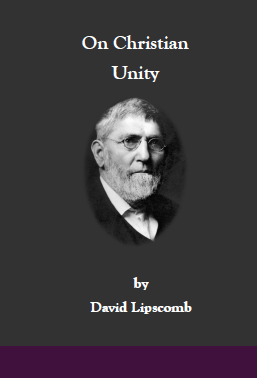
On Christian Unity, David Lipscomb (137 pp.)
David Lipscomb (1831—1917) was possibly the most influential preacher, teacher, and writer of the Restoration (Stone-Campbell) Movement in the South during the nineteenth and twentieth centuries. In this volume, his short treatise Christian Unity: How Promoted and How Destroyed and various articles from the Gospel Advocate have been brought together to demonstrate this pioneer’s views concerning the need for union. Lipscomb, having lived through both the Civil War and the split between the Disciples of Christ and the Churches of Christ, is a vital testimony to the call for Christian union. His writings are still pertinent today, as they provide modern Christians with an example of Christian liberty and harmony, while also standing for the unique principles which underlie our movement.
Sermons on the Book of Acts, C. C. Crawford (328 pp.)
Cecil Clement Crawford (1893—1976) was known for his sermon books and fervent defense of the principles underlying the Stone-Campbell Movement. His works continue to be utilized by preachers and Bible class teachers today. Perhaps his most popular work was his Sermon Outlines on Acts. Originally published in 1919—shortly after the end of World War 1—this work contains expositions of both doctrinal and practical value. The book of Acts has been foundational for the beliefs and practices of the churches of Christ, providing a blueprint for church polity, preaching, evangelism, worship, and organization.
A Guide to Bible Study, J. W. McGarvey (162 pp.)
The Bible is an essential tool in every Christian’s arsenal. However, readers can easily become discouraged when studying it due to the complexity of its history, languages, cultures, and teachings. In this short book, McGarvey provides a brief summary of each book of the Bible. He also gives students a foundational understanding of the history underlying the 66 books which make up the Bible. From the beginning of mankind to the kings of Judah and Israel to the ministries of Christ and his apostles, McGarvey addresses a vital need in the church for biblical literacy. The Bible is the foundation of western culture. Therefore, even non-Christians should become familiar with its teachings. We hope that this volume helps Christians deepen their love for Scripture, as well as help skeptics see the vast wisdom and history underlying this divine volume.
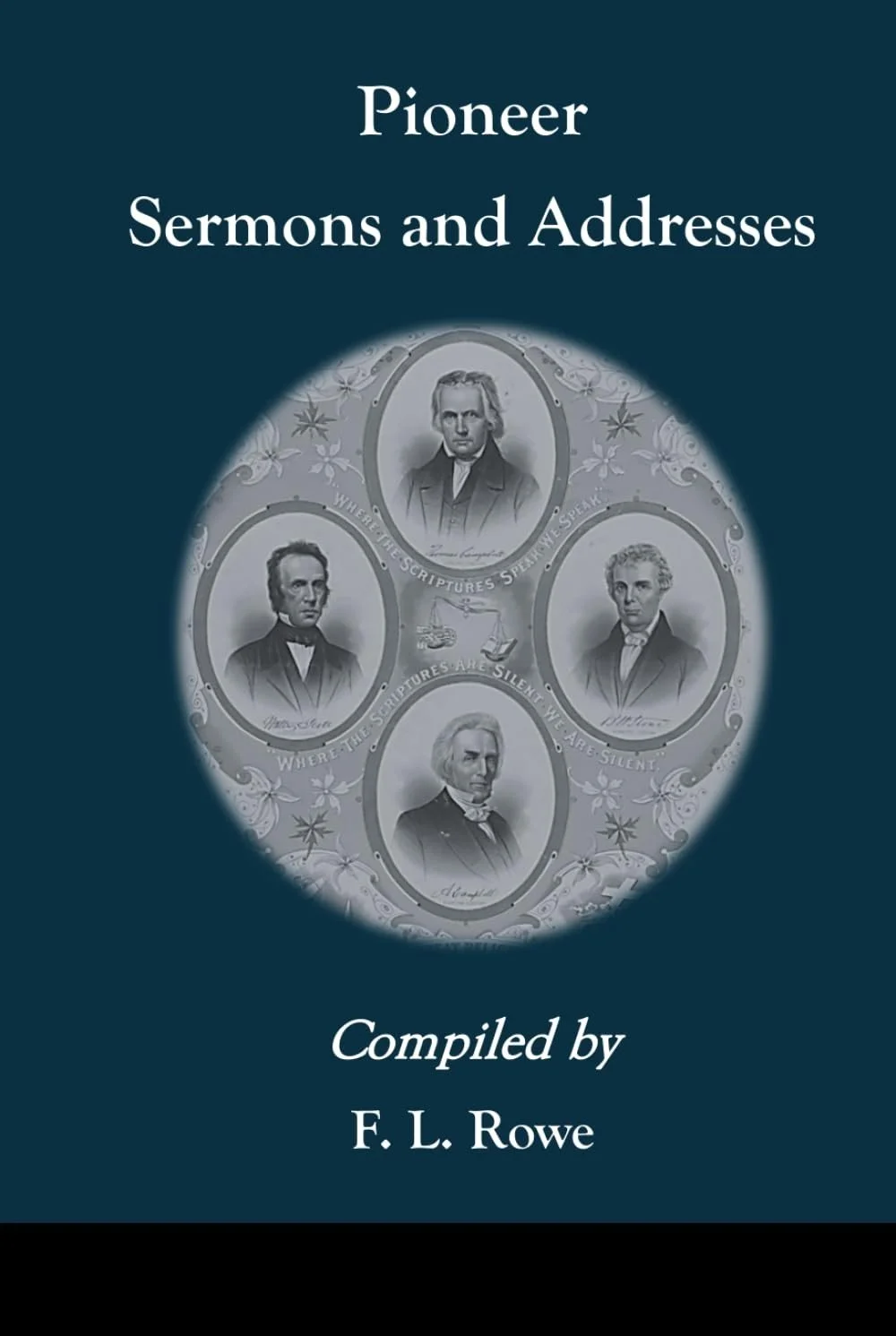
Pioneer Sermons and Addresses, F. L. Rowe, Ed. (256 pp.)
The Restoration Movement was initiated through various revivals across the country in the nineteenth century. Preaching was the spark that ignited this growing desire for reformation among the millions who now share in the movement’s legacy. In 1908, F. L. Rowe began to compile twelve of the most impactful sermons from the early reformers. This newly published volume revises and reformats Rowe’s work, adding biographical illustrations for each writer. Hopefully, this work will be a benefit to students of our movement, reminding readers of the rich heritage of preachers we share.
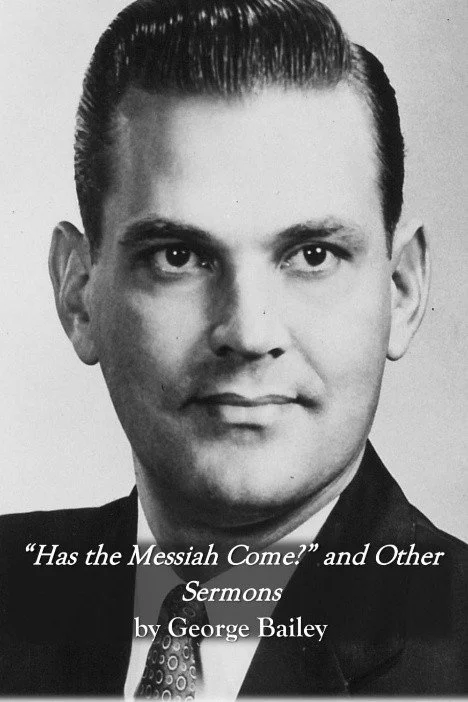
“Has the Messiah Come?” and Other Sermons, George Bailey (190 pp.)
The sermons contained in this book first appeared in print between the years of 1963 and 1965. They were published in a monthly magazine/newsletter sent out by the 5th and Highland Church of Christ in Abilene, Texas. These sermons were heard over 375 radio stations throughout the United States, as well as stations in Canada, Bermuda, Liberia, Nigeria, and Europe. Many of the stations in the United States were in states that we would still consider as “Mission Areas” where there are few congregations of the churches of Christ. George Bailey was considered a “master of epigram” and was skilled in the use of alliteration. He was once the preacher at the College Church of Christ in Abilene. This volume contains twenty of his sermons from the Herald of Truth magazine. We hope this book will benefit readers, as it comes from one of the great gospel preachers of the twentieth century.

A Treatise on Prayer, Robert Milligan (95 pp.)
Robert Milligan (1814—1875) was one of the leading scholars in the Stone-Campbell Movement. While he was best known for his classic work The Scheme of Redemption, Milligan also wrote several notable articles for publications such as the Millennial Harbinger. This work belongs to the latter. In seven articles, Milligan explains the biblical teaching concerning the principles and practices of prayer. Every Christian should devote themselves to this discipline. However, many often find themselves resonating with the disciples when they asked, “Lord, teach us to pray.” This short treatise seeks to answer this question in a biblical and devotional manner.